
Golden Goose in a glance: what you’re truly buying
Golden Goose shoes blend Italian craftsmanship, hand-distressed finishes, and a intentionally aged appearance that feels lived-in from day one. The price derives from skilled labor, materials, and a design philosophy that values uniqueness over flawless perfection.
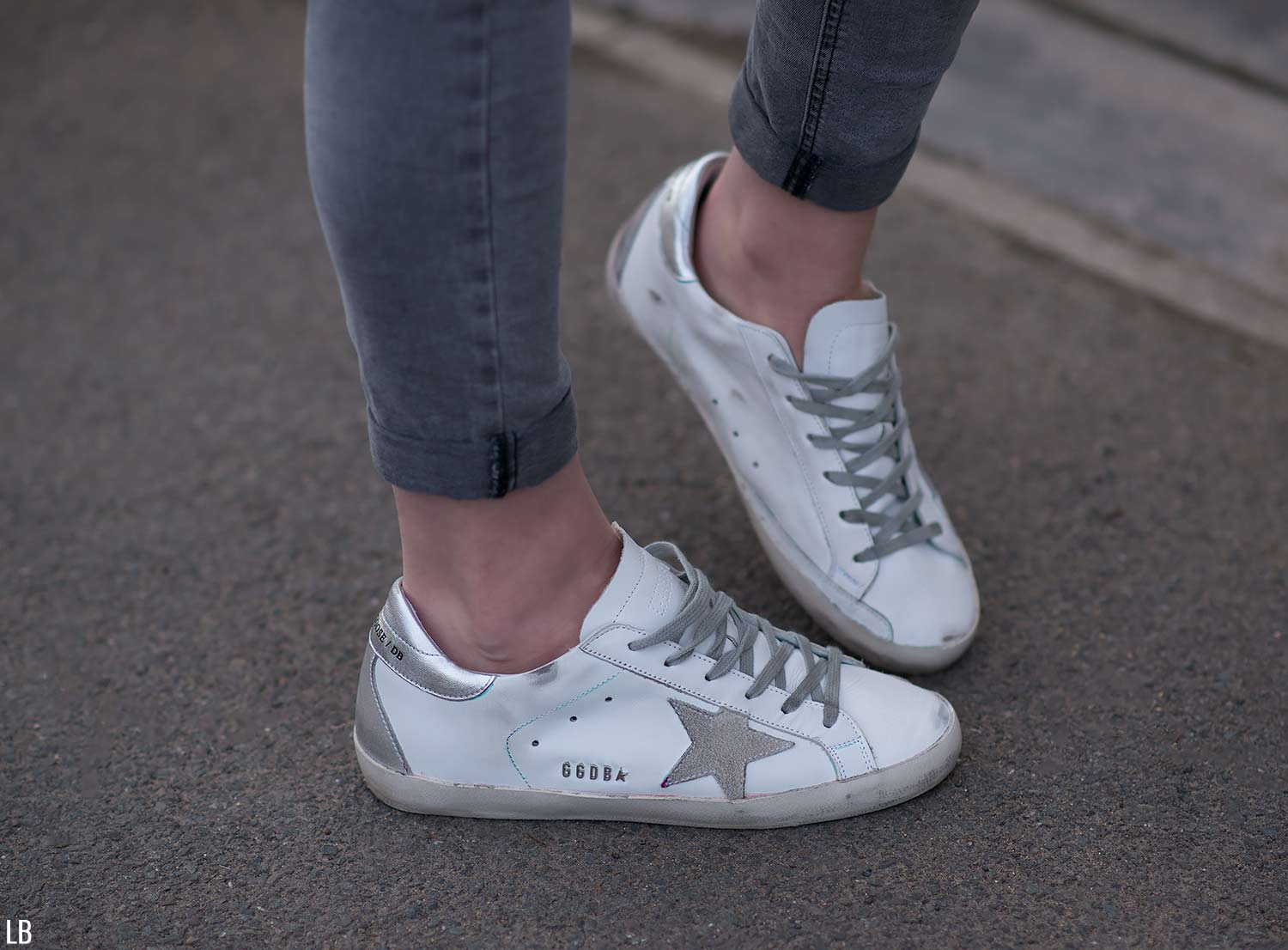
The brand’s signature is the Super-Star, while the lineup includes Ball Star, Mid Star, Francy, Sky Star, Dad-Star, plus Hi Star, all made with rubber cupsoles with leather or suede uppers and leather interiors. Each pair is detailed by hand in Italy, thus scratches, brush marks, and weathering changes, which is the goal. If you want a spotless, basic sneaker, Golden Goose is the wrong target; if you seek character, personality, and immediate comfort that looks lived-in, it hits the brief. You’re also buying consistency in lasts, reliable quality assurance for an artisanal product, and an aesthetic that won’t date out when the first crease shows up. The price assessment is less concerning price-per-use endurance versus, say, a basketball retro, and more concerning if the design story matches your personal wardrobe and taste.
Will Golden Goose sneakers worthwhile for you?
They’re worth it if you appreciate the aged aesthetic, want Italy-crafted build, and value sneakers that look better the more you wear them. They won’t seem valuable if you favor a pristine minimal look or when you’re chasing technical performance.
Begin with the aesthetic test: if you ever find yourself babying white leather shoes, the aged-look idea will frustrate you; when you naturally like raw hems, selvedge fades, and vintage tees, you’ll get it immediately. Concerning quality, you’re getting leather surfaces, leather interiors, sturdy cupsoles, and hand-finishing from Italian workshops, which position them at the high-end segment of casual sneakers. Cushioning is a strong point for many users after a quick adjustment; the padded collar and hide interior create a moccasin-type comfort, which fits lifestyle use rather pinkgoldengoose.org than sport. Longevity remains good for fashion sneakers when rotated and cleaned, with bottoms and tops aging gracefully as scratches are design features, not defects. When you want an enduring, perfect low-top, Common Projects offers better sense; if you desire a luxe beater with personality from of the box, Golden Goose earns its place.
Pricing breakdown and what influences cost
Many main Golden Goose models cost in the United States starting at high $400s to around $700s, with special versions surpassing $800. Price changes with model complexity, materials, and manual detailing duration.
As baseline information: point: Super-Star shoes usually price around $495–$625 according to material and detailing; Ball Star plus Mid Star land generally in the $530–$625 range; Francy and Sky Star ankle styles usually price $600–$745; heavily embellished, crystal, or limited collaboration pairs can go higher. Several cost drivers are non-negotiable: Italian work costs, premium leather and premium suede, hand-distressing hours, and small-batch finishing that avoids factory standardization. Special collections, appliqués, glitter finishes, and specialty laces add individual expenses. Sales channel matters as well, since boutiques and flagships often prioritize new and exclusive releases that command top-of-range pricing.
| Sneaker | Standard US Price | Produced In | Construction | Aesthetic Focus |
|---|---|---|---|---|
| Golden Goose Super-Star | $495–$625 | Italy | Leather top, leather lining, rubber cupsole, hand-distressed | Classic, pre-weathered, craft-made |
| Common Projects Achilles | $445–$535 | Italy | Hide upper, hide lining, rubber sole, pristine surface | Clean, flawless upscale |
| Saint Laurent Court Classic | $595–$625 | Italy | Leather/suede top, leather lining, rubber cupsole | Minimal with brand details |
| Nike Dunk (Leather) | $115–$135 | Varies | Mixed/hide upper, textile lining, rubber cupsole | Athletic legacy, mainstream |
That spread illustrates the choice: Golden Goose challenges directly with premium style shoes on materials and construction, and justifies the extra dollars with labor-intensive finishing and a distinctive design language. When the weathered story resonates, the price means paying for artisan work and time rather than a logo alone. If this fails, equivalent Italian-made options exist at similar or slightly reduced costs without the patina.
How do Golden Goose sneakers fit and comfort?
Many users discover Golden Goose runs true to size in European measurements, with a slightly generous toe area and a mild-to-moderate top. Thin feet may want to drop half a size; wide feet usually stay true to size.
Expect a brief break-in: the material firms the first day or two, then softens quickly, specifically at the collar and vamp. The padded heel counter maintains grip in check, and the leather interior adds step-in comfort you’ll notice versus fabric-lined sneakers. Cushioning feels like a dense, supportive cupsole with a padded insert rather than a springy foam athletic; for daily strolling and urban wear it’s completely sufficient. The profile is versatile under jeans, trousers, and pants because the last won’t appear chunky, and the pre-worn borders eliminate crease anxiety fade right away. Should you use supports, examine your pair in person: some insoles are more tightly fixed than others, and space may be tight with an added insert.
Professional advice: When you’re between sizes, prioritize heel lock over front “room.” A snug heel featuring thumb width at the toe will break in cleanly, while a loose heel will damage the collar and seem loose as the material gives.
Authentication guide: how to spot authentic vs counterfeit
Commence by confirming the labeling: genuine models are marked “Made in Italy” and carry consistent model, size, and material info on the interior tag and the box label. Hand-distressing should look varied and layered, not applied-on or precisely mirrored between shoes.
Progress from general to micro. Initially, the package: look for an obvious model code that matches the shoe’s model name, color, and material, plus accurate Continental dimensions; lettering and spacing are precise, and the label print is crisp. Second, the footwear’s construction: the star overlay looks precisely attached, the edges are clean even if deliberately rough-cut, and the rubber foxing has realistic scuffing that doesn’t repeat exactly on both shoes. Third, materials: leather and suede ought to feel thick and smell like genuine material rather than chemical plastic; linings read as leather, not woven polyester. Fourth, branding: older pairs often include “GGDB” marks because the brand started as Golden Goose Deluxe Brand, while newer releases emphasize “Golden Goose”; either way, logos are sharply applied and matching with the season. Lastly, materials: storage bags are dense with uniform drawstrings, tissue is sized properly, and extra laces, if included, match the design’s product specifics.
Should you stay unsure, cross-check stock photos from authorized retailers for that exact model code and shade; the placement of design, back panel, and perforations should match. Weight can help: real models feel substantial for style footwear but not heavy; should footwear feels ultra-light with artificial bases, be suspicious. Asymmetric bonding might appear on legit pairs because of hand-finishing, though it shouldn’t be sloppy or messy. When buying pre-owned, inspect high-wear points—heel lining, outsole border, and holes; the right type of aging looks like marks, not separation.
Four lesser-known facts that help with ID and expectations: first, every pair is finished by hand in Italy, so identical mark matching between left and right models is a red flag. Second, the brand’s earlier name was Golden Goose Deluxe Brand, and “GGDB” markings are still seen on tags and insoles for certain seasons and designs. Additionally, toweling lining appears on numerous ankle styles to absorb sweat and speed break-in, which is why some Francy and Sky Star pairs feel extra comfortable. Finally, the intentionally yellowed edges on midsoles and foxing come via finishing, not wear, so a new pair might seem “retro” out of the box without being worn.
Warning: Undefined array key "ssba_bar_buttons" in /home/u996422686/domains/casabonitamadeiras.com.br/public_html/wp-content/plugins/simple-share-buttons-adder/php/class-buttons.php on line 604
Warning: Undefined array key "ssba_bar_buttons" in /home/u996422686/domains/casabonitamadeiras.com.br/public_html/wp-content/plugins/simple-share-buttons-adder/php/class-buttons.php on line 604
Warning: Undefined array key "ssba_bar_buttons" in /home/u996422686/domains/casabonitamadeiras.com.br/public_html/wp-content/plugins/simple-share-buttons-adder/php/class-buttons.php on line 604
Warning: Undefined array key "ssba_bar_buttons" in /home/u996422686/domains/casabonitamadeiras.com.br/public_html/wp-content/plugins/simple-share-buttons-adder/php/class-buttons.php on line 604


